

There is something almost magical about the moment a still puddle turns a city street into a mirror, or a restaurant window catches the warm glow of an interior scene and doubles it into art. Reflection photography taps into one of light’s most fundamental behaviours — the angle of incidence equals the angle of reflection — and once you understand that simple principle, the possibilities become extraordinary. Learning how to capture reflection photography is less about chasing perfect conditions and more about training your eye to see the hidden images that already exist all around you.
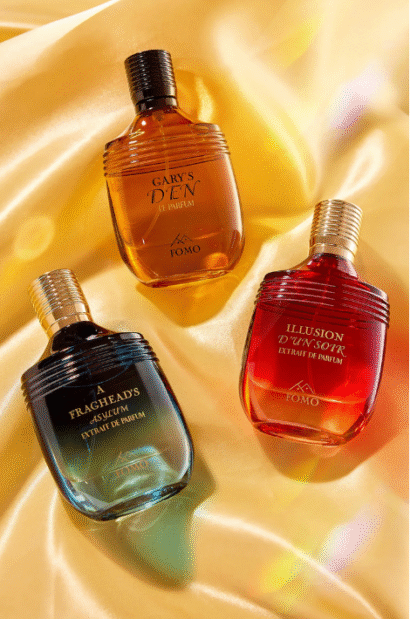
Reflective surfaces are far more varied than most people expect. Yes, oceans and rain-slicked pavement are classic choices, but metals, tiles, mirrors, glass storefronts, and even the curve of a polished product can all serve as your canvas. Each surface bends light differently, offering its own mood and character. For Toronto and GTA business owners — whether operating restaurants, retail stores, or professional services — reflection photography offers a powerful tool to showcase products, food, and brand imagery in compelling ways. The technique is equally at home in a controlled studio shoot and out on a bustling street, which is precisely what makes it such a versatile and rewarding skill to develop.
Lighting Conditions for Reflective Surfaces
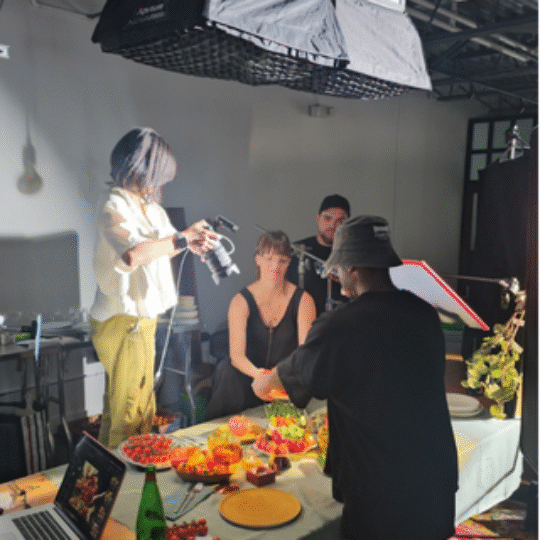
Natural or artificial — the light source you choose shapes everything in reflection photography. For natural light, position a large window to your side or slightly behind the subject, then diffuse it with a white curtain to soften harsh rays. A reflector placed opposite fills in shadows without adding a second light source. Use soft, directional natural light from a window (never camera flash), style subjects intentionally with fresh ingredients and oil brushing for shine, and choose the right angle for the dish or product.
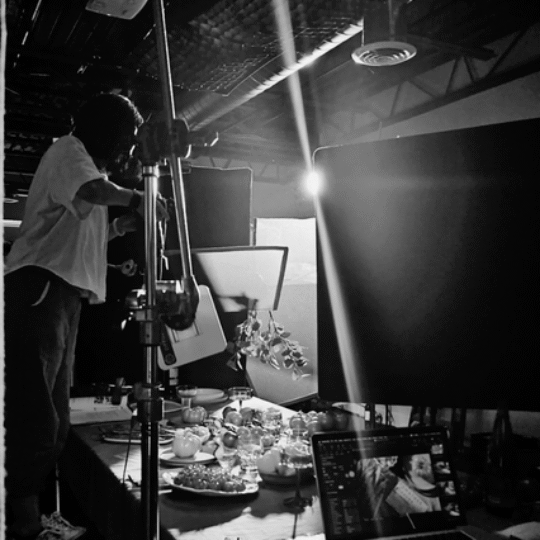
Studio setups open up more control. Side lighting is the go-to for metal and glass, since reflections stay subtle along the edges rather than washing out the surface. Single-source continuous lighting creates dramatic contrast on glass or metal, while two lights placed on either side give full, even coverage. Backlighting works particularly well for clear glass — it traces the product’s transparency and gives it a luminous quality.
When light feels too harsh, diffusion materials — white sheets, softboxes, or photography umbrellas — scatter the rays into a smooth, even glow. An Impact Square 40×40 softbox plus grid works exceptionally well for shooting reflective items like glassware. White foam boards opposite your key light redirect fill light into shadowed areas. Adjusting the angle even slightly changes the reflection entirely, so experiment before committing to a final frame.

Camera Settings and Gear for Reflection Photography
Mount your camera on a tripod, especially across a product catalogue where framing must stay locked between shots. Position the camera at a slight angle to the reflective surface so neither the lens nor the light source appears in the reflection.
For product and food photography, a sharp lens at f/1.8–f/2.8 gives you the depth-of-field separation that instantly elevates the image. Studio portraits with strobes call for f/8, ISO 100, and a shutter speed around 1/160 to sync cleanly with your flash units. Natural light portraits work best at f/2.0 for a single subject, with shutter speed at 1/200 or faster and ISO as low as your exposure allows — use single-point AF or eye-detect to keep focus precise.
Working with moving water? A long exposure stretches the reflection into something dreamlike, creating stunning hazy effects with dreamy ambiance. On the gear side, macro lenses like the Canon RF 35mm f/1.8 or Sony FE 90mm f/2.8 handle close-up detail beautifully. A sturdy tripod with an overhead extension arm handles tablescapes and 90-degree shots. Wide-angle lenses open up broader, more dramatic compositions, and modifiers like softboxes, umbrellas, and reflectors shape and soften light to perfection.
Composition and Toronto Locations for Reflection Photography
The rule of thirds still has its place, but for reflections, centering the horizon often works better — symmetry is the whole point. That said, don’t ignore asymmetry entirely: placing your subject off-center within the reflection creates tension that draws the eye in.
Strip distractions from the frame and set your focal point on the reflection itself, not the object creating it. Watch your angles — a slight shift can mean the difference between a clean shot and catching your own silhouette in the glass. For window and restaurant scenes, twilight’s blue hour is your best ally: floodlit buildings and warm interior glows layer beautifully against the darkening sky. Before any product shot, check the surface for dust and smudges.
Toronto rewards the patient photographer. The Distillery District’s brick and cobblestone create rich, textured reflections; Kensington Market’s painted storefronts and eclectic restaurant facades offer colour and character; and the St. Lawrence Market area at Front Street East delivers strong architectural lines. Greektown, Little Italy, and Chinatown add another dimension — restaurant windows here frame entire cultural stories in a single frame. These iconic food districts highlight Toronto’s gastronomic diversity and provide excellent opportunities for capturing restaurant window reflections and food photography that showcases the city’s dynamic culinary scene.

Bring Your Vision to Life
Reflection photography transforms ordinary moments into extraordinary images, whether you’re showcasing a signature dish, capturing a storefront’s personality, or creating portraits that stand out in a competitive market. Ready to elevate your brand imagery with professional reflection photography? Contact Gia Marescotti Photography today to book your session and discover how the art of reflections can tell your Toronto business story in a whole new light.
Ready to take your food and brand imagery to the next level with the power of reflection photography?
Gia Marescotti is a Toronto-based photography studio crafting stunning visuals for restaurants, retailers, and brands across the GTA. Whether you need artful food shots with mirrored surfaces, glass-lit product compositions, or portraits that truly stand out, Gia brings an expert eye for light, angle, and storytelling to every session. Don’t let your visuals blend into the background — let them reflect your brand’s best self. Explore the portfolio and book your shoot with a trusted food and beverages photographer in Toronto.