

Every photograph is a negotiation between light and the camera’s ability to capture it. ISO is the setting that tells your camera how sensitive its sensor should be to the light available. Understanding what ISO is in a camera can be the difference between a sharp, clean image and one that looks grainy and unusable.
The term itself comes from film photography, where ISO (and its predecessor, ASA) measured how sensitive a roll of film was to light. A roll of ISO 100 film needed more light to produce a proper exposure than ISO 800 film. Digital cameras kept the same numbering system, but added a powerful advantage: you can now change ISO between every single frame, rather than committing to one setting for an entire roll.
ISO doesn’t work alone. It’s one of three settings — alongside shutter speed and aperture — that make up what photographers call the exposure triangle. Together, they give you control over how an image looks, no matter how the light behaves.
ISO Numbers and Image Noise
ISO numbers — 100, 400, 800, 1600 and beyond — measure relative sensitivity. ISO 200 needs half the light of ISO 400 to reach the same exposure. The higher you push that number, the more your camera amplifies the signal from its sensor.
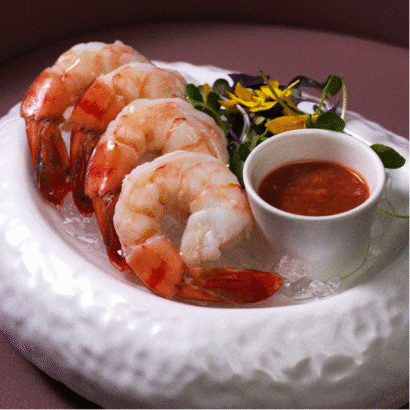
ISO 100
That amplification comes at a cost. A weak signal stretched to brightness picks up errors along the way — what shows up in your photo as grain, or digital noise. Low ISO settings, like 100 or 200, keep that amplification minimal and produce the cleanest images. Medium settings, around ISO 400 to 800, are a reasonable trade-off for mixed or changing light. Push into ISO 1600 and above, and noise becomes visible — sometimes distractingly so, depending on your camera.
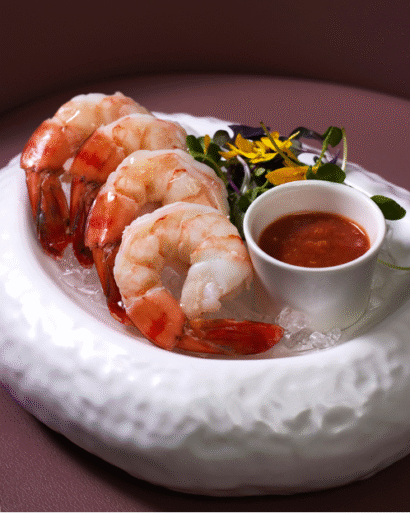
ISO 6400
Practical ISO Settings for Food, Portraits and Corporate Work
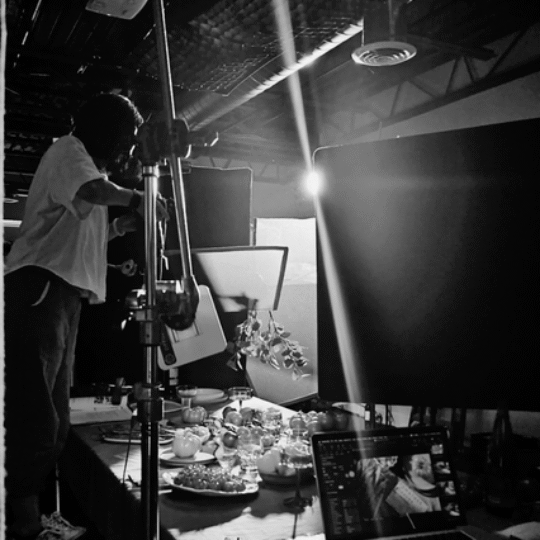
Food photography demands the cleanest possible image — which means starting at ISO 100 whenever your light allows it. Natural window light is your best ally; if you’re shooting in a restaurant where overhead lighting is dim and unflattering, ISO 800–1600 becomes necessary, and a small LED panel for fill can help you stay at the lower end of that range. For commercial food work, staying at ISO 400 or below ensures your images remain sharp and appetizing.
Portrait work adds another variable: movement. A shutter speed of at least 1/125 keeps your subject sharp, so you’ll want to keep ISO between 100 and 400 in controlled conditions — studio or bright outdoor light — where aperture and shutter adjustments carry most of the load.
Corporate headshots follow the same logic. A starting point of f/8, 1/200 and ISO 100–200 with flash at 1/8 power gives you a crisp, professional result. At corporate events, where light shifts constantly, Auto ISO with a ceiling of 1600–3200 lets the camera adapt without you losing quality between frames.
ISO Knowledge as a Business Asset
Toronto’s food and beverage market is among the most competitive in Canada. Restaurants without quality food images are essentially invisible to customers browsing delivery apps — and those apps are where billions in spending decisions get made every year.
For corporate professionals, the stakes are just as immediate. A headshot is often the image a client or partner sees before a first meeting. On LinkedIn, on your website, in a pitch deck — that photograph is doing work before you ever enter the room.
This is where understanding ISO stops being a technical footnote and starts being a business advantage. When you know what your photographer is optimising for, you can ask better questions, set better expectations, and recognise the difference between a quote that cuts corners and one that delivers. A studio with proper lighting control keeps ISO low and noise out of your brand imagery. A rushed shoot in a dim boardroom — without the right settings or supplemental light — can undermine an otherwise strong visual identity.
Whether you’re launching a new menu, updating your team’s headshots, or building a visual brand from scratch, working with a photographer who understands these technical details makes all the difference. For Toronto and GTA business owners looking for food photography, portrait sessions, or corporate imagery, Gia Marescotti brings the expertise and lighting control your brand deserves.
When it comes to getting the most from your photography — whether you’re shooting a restaurant menu or plated dishes at low ISO for maximum sharpness — having a true expert behind the camera makes all the difference. Gia Marescotti is a Toronto-based photography studio dedicated to creating stunning, appetite-driven visuals for food brands, restaurants, and beverage companies. With a meticulous eye for light, composition, and colour, every shot is crafted to make your product irresistible. Explore the portfolio and see how professional imagery can elevate your brand: food and beverage photographer Toronto.